




Many people choose dried fruits for their long shelf life and convenience, but their real value lies in nutrition and daily energy support. When eaten in the right portions, dried fruits can provide fiber, natural sugars, and essential minerals that help the body stay active and balanced throughout the day. Exploring dried fruit benefits allows you to understand how these nutrient-dense foods contribute to digestion, heart health, and sustained energy. This article breaks down what dried fruits contain and how to include them wisely in a healthy lifestyle.
I. What Are Dried Fruits?

Dried fruits are fresh fruits that have had most of their water content removed through drying methods such as sun drying, air drying, or low-heat dehydration. This process helps extend shelf life while preserving many natural nutrients found in fresh fruit. As a result, dried fruits become more concentrated in flavor, natural sugars, and calories.
One of the key dried fruit benefits is that drying allows important nutrients like fiber, potassium, and antioxidants to remain available in a compact form. Because the water is reduced, a small serving of dried fruits can deliver similar nutritional value to a larger portion of fresh fruit. This makes dried fruits a practical option for quick snacks, travel food, or adding nutrition to meals when fresh fruit is not always accessible.
However, not all dried fruits are the same. Some products may contain added sugar or preservatives, which can reduce overall health value. Choosing unsweetened and minimally processed options helps you enjoy dried fruit benefits while supporting a balanced and health-conscious diet.
II. Dried Fruit Nutrition: What's Inside?
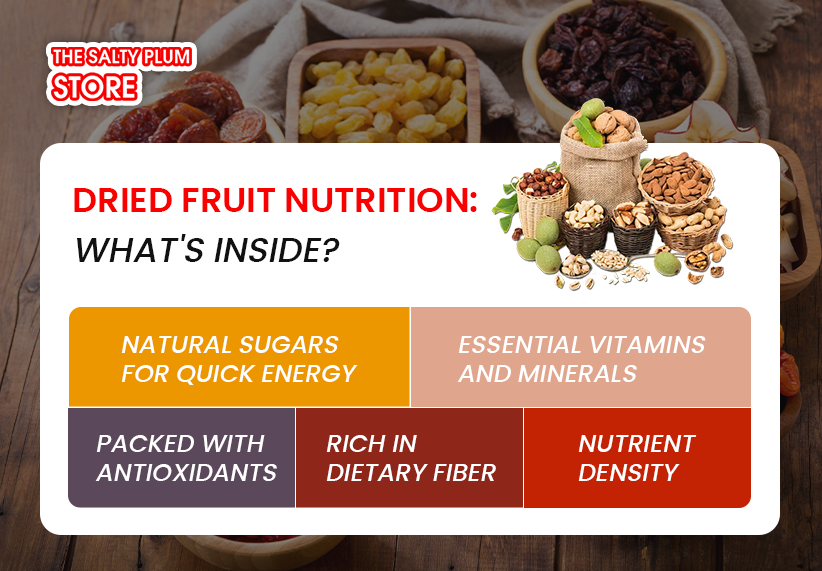
When you reach for a handful of dried fruits, you are not just enjoying a sweet bite, you are fueling your body with concentrated nutrients. The dried fruit benefits begin with their impressive nutrition profile. Removing water from fresh fruit makes vitamins, minerals, and fiber more compact, so every serving delivers a powerful boost.
- Natural sugars for quick energy: Dried fruits contain natural glucose and fructose that help restore energy levels during busy days.
- Rich in dietary fiber: Fiber supports digestion, helps regulate appetite, and contributes to a healthy gut.
- Packed with antioxidants: Compounds like polyphenols protect cells from oxidative stress and support long-term wellness.
- Essential vitamins and minerals: Potassium, iron, magnesium, and vitamin A are commonly found in dried fruits, helping maintain heart health, strong bones, and good vision.
- Nutrient density: Because water is removed, nutrients are concentrated, making dried fruits a compact source of nourishment compared to fresh fruit.
III. Key Dried Fruit Benefits for Health
The concentrated nutrition in dried fruits translates into real, measurable health advantages backed by scientific research. Here's how incorporating these snacks into your routine can support your wellbeing.
1. Supports Digestive Health

One of the most well-documented dried fruit benefits is improved digestion. Prunes are particularly effective due to their combination of soluble and insoluble fiber plus natural sorbitol. Research shows that consuming prunes regularly can help promote regular bowel movements and relieve constipation naturally. Figs and dates also provide substantial fiber, with dried figs offering about 3.7 grams per quarter cup, making them excellent choices for digestive support.
2. Boosts Heart Health
Multiple studies confirm that regular dried fruit consumption supports cardiovascular wellness. Research published in nutrition journals found that people who include dried fruits in their diet tend to have lower BMI and better systolic blood pressure compared to non-consumers. Raisins provide potassium that helps regulate blood pressure, while the fiber content in various dried fruits aids in managing cholesterol levels. The polyphenols and antioxidants present in dried fruits also protect blood vessels from oxidative stress.
3. Provides Quick, Natural Energy

Dried fruits serve as excellent energy sources for active lifestyles. Their natural sugar content, combined with essential minerals like potassium and magnesium, makes them ideal for pre-workout fuel or combating afternoon fatigue.
Athletes frequently choose dates or raisins because they provide rapid energy without the crash associated with processed sugary snacks. The portable nature makes them convenient for anyone needing an energy boost on the go.
4. Strengthens Bone Health
Scientific evidence supports dried fruit benefits for bone density. A randomized controlled trial at Penn State University found that eating 50 grams of prunes daily helped protect bone mineral density in postmenopausal women. This makes prunes particularly valuable for women at risk of osteoporosis.
Dried figs also contribute to bone health through their calcium, magnesium, and vitamin K content, all essential minerals for maintaining strong bones throughout life.
5. Rich in Antioxidants
Despite the drying process, these fruits retain impressive levels of beneficial plant compounds. Dried fruits contain polyphenols that fight free radicals and reduce oxidative stress in the body. Prunes, raisins, and dried berries like cranberries maintain high antioxidant activity even after dehydration. These compounds support cellular health and may help reduce inflammation throughout the body.
6. Supports Immune Function

Certain dried fruits contribute to a stronger immune system. Dried apricots provide beta-carotene, which the body converts to vitamin A for immune response support. Dried cranberries contain proanthocyanidins, unique compounds that research suggests may help prevent urinary tract infections by preventing bacteria from adhering to bladder walls.
7. May Aid Weight Management When Portioned Correctly
While calorie-dense, dried fruit benefits can extend to weight management when consumed mindfully. Studies show that people who eat dried fruits tend to have lower body weight and better diet quality overall. The fiber content promotes feelings of fullness, potentially reducing overall calorie intake throughout the day.
However, this benefit only applies when you control portions carefully. A small handful (about 30-40 grams) makes an appropriate serving size.
8. Important Considerations for Blood Sugar

Research indicates that most dried fruits have a low to moderate glycemic index. Studies found that dates range from 42-62, dried apricots 30-42, raisins around 55, and prunes approximately 38 on the glycemic scale. However, because the natural sugars are concentrated, dried fruits can still impact blood sugar more significantly than fresh fruits.
For people monitoring glucose levels, pairing dried fruits with protein or healthy fats helps slow sugar absorption. Always consult with a healthcare provider if you have diabetes or insulin resistance before adding dried fruits to your regular diet.
IV. Conclusion
When chosen carefully and eaten in the right portions, dried fruits can be a valuable addition to a healthy daily diet. Their combination of fiber, natural energy, and essential minerals explains why dried fruit benefits are often linked to better digestion, sustained energy, and overall wellness. The key is mindful consumption and selecting products without added sugar or unnecessary preservatives.
If you are looking for high-quality options to enjoy dried fruit benefits with confidence, you can explore a variety of premium dried fruits at The Salty Plum Store. Choosing well-sourced dried fruits allows you to support your health while enjoying natural flavor and everyday convenience.
Related Article: