




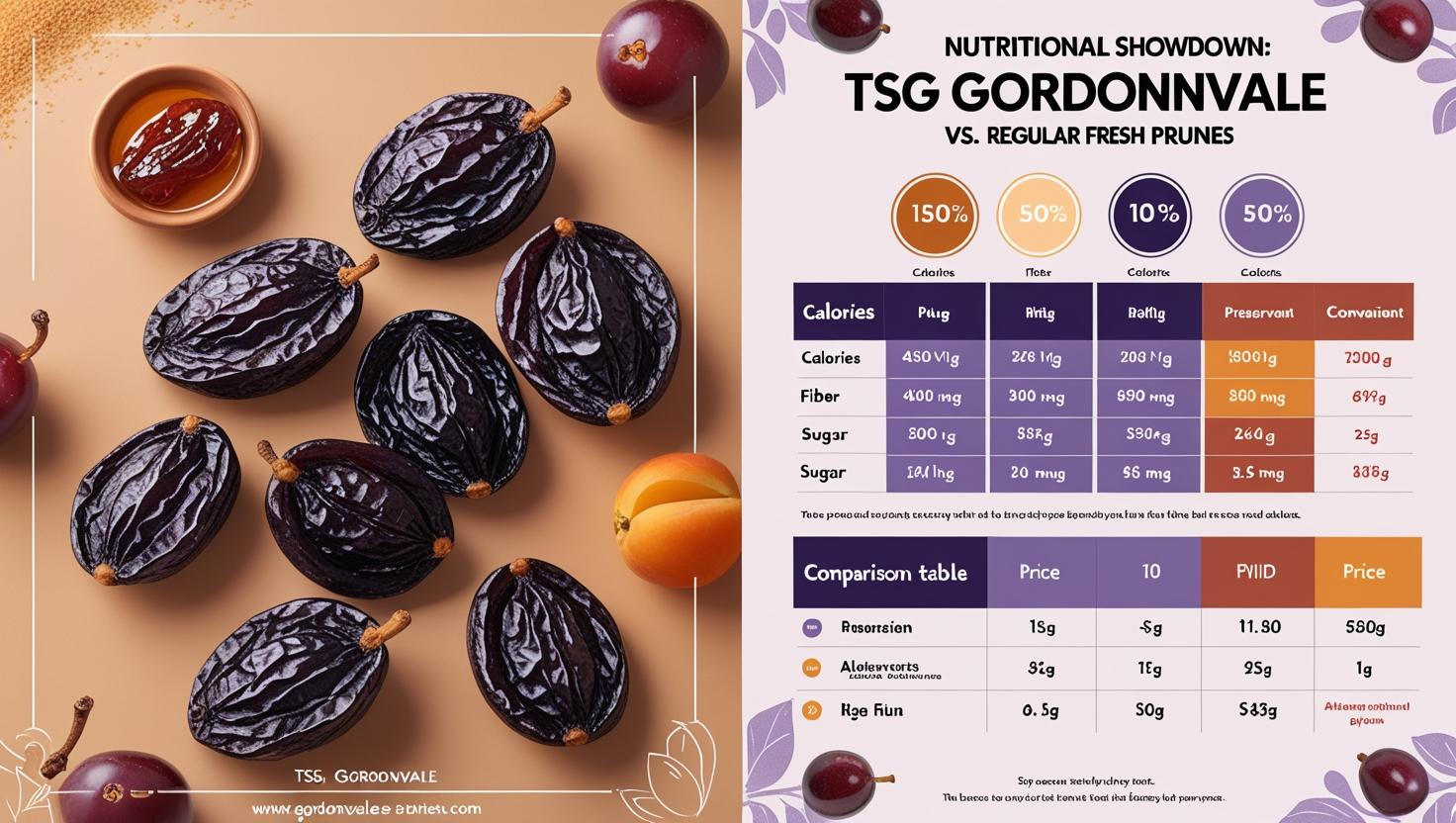
Among countless nutritious fruit options, prunes (dried plums) consistently rank at the top because of their abundant fiber, vitamins, and essential minerals. However, when comparing TSG Gordonvale dried prunes to regular fresh prunes, you'll notice distinct differences in calories, fiber, sugar content, storage, pricing, and convenience. This article provides a detailed analysis of each aspect so you can easily select the best option for your nutritional needs and lifestyle.
Product Introduction
TSG Gordonvale Dried Prunes:
Our dried prunes are made from carefully selected fresh prunes using advanced freeze-drying (sublimation) or cold-drying techniques. This process removes nearly 90% of the water while preserving 97% of the vitamin C, minerals, and cellular structure. The product is free from added refined sugars; it is “nitrogen-flushed” and then sealed with a secure zipper package to prevent oxidation, offering a shelf life of 6–12 months.
Regular Fresh Prunes:
In contrast, regular fresh prunes are harvested, washed, sorted, and quickly packaged with a high water content (85–90%). Although their nutritional value remains practically intact, they must be refrigerated continuously and have a shelf life of only 7–10 days.
Calorie Comparison
- TSG Dried Prunes (per 100 g): Approximately 240–260 kcal
Explanation: The energy is concentrated due to the loss of water, which results in a higher solid content. - Fresh Prunes (per 100 g): Approximately 46 kcal
Explanation: The high water content means that most of the weight comes from water rather than energy-dense solids.
Comment: If you need a quick energy boost, TSG dried prunes are an excellent choice. In contrast, fresh prunes are better suited as a low-calorie snack for everyday use.
Fiber Comparison
- TSG Dried Prunes: About 7–8 g of fiber per 100 g (including both soluble and insoluble fiber).
- Fresh Prunes: Approximately 1.4–2 g of fiber per 100 g.
Comment: The high fiber content of dried prunes supports healthy bowel function, helps prevent constipation, and stabilizes blood sugar levels. For individuals following an eat-clean diet, TSG dried prunes can be considered a “superfood” to help quickly meet a daily fiber intake goal of 25–30 g.
Sugar Content Comparison
- TSG Dried Prunes: Approximately 38–40 g of total sugar per 100 g—composed mainly of natural fructose and glucose, with no added refined sugar.
- Fresh Prunes: Around 9–10 g of sugar per 100 g, consisting of sucrose, fructose, and glucose.
Comment: Although dried prunes have a higher sugar content due to the concentration of natural sugars, the accompanying fiber helps slow sugar absorption. For diabetics, fresh prunes might be safer for direct consumption, but dried prunes can be used in controlled portions (typically 15–20 g per serving) to benefit from their fiber content.
Storage and Preservation
- TSG Dried Prunes:
- Excellent resistance to heat and moisture due to multi-layer zipper packaging and inert gas treatment.
- Can be stored at room temperature (20–25 °C) for 6–12 months without quality degradation.
- If refrigerated (4–8 °C), the shelf life can extend up to 12 months while maintaining a naturally chewy texture.
- Regular Fresh Prunes:
- Require continuous refrigeration (0–4 °C) and have a very short shelf life of only 7–10 days.
- Storing them beyond this period results in softening, spoilage, and loss of flavor.
Comment: TSG dried prunes clearly have an advantage in long-term storage. They save valuable refrigerator space and help reduce food waste.
Price Comparison
- TSG Dried Prunes: Priced at approximately 3.95 AUD for a 100 g pack (or about 39.5 AUD per kg).
- Fresh Prunes: Cost around 4–6 AUD per kg (equivalent to roughly 0.4–0.6 AUD per 100 g).
Comment: While fresh prunes are 10–15 times cheaper than dried prunes on a per-weight basis, when you consider total cost of ownership—factoring in purchase price, refrigeration expenses, and potential spoilage—dried prunes may prove more cost-effective for long-term use. Fresh prunes might be ideal for occasional consumption, but dried prunes can be stocked year-round while maintaining their nutritional benefits.
Convenience
- TSG Dried Prunes:
- Lightweight, without the need for washing or additional preparation.
- Easy to carry in a bag, backpack, or office lunchbox.
- Highly versatile—enjoy them straight out of the package, as an ingredient in salads, cereals, baked goods, or even in beverages.
- Fresh Prunes:
- Require washing, drying, and storing in an airtight container.
- Not very convenient for travel, picnics, or office use if refrigeration isn’t available.
- Less versatile due to their high moisture content; they’re rarely used as a topping in baked items.
Comment: The convenience of TSG dried prunes makes them far better suited for busy, on-the-go lifestyles compared to fresh prunes.
Culinary Applications
TSG Dried Prunes:
- Can be ground and mixed into dough for tart pastries or cookies.
- Used in sauces—soaked in rum and blended into a glaze for beef or chicken.
- Served as a healthy snack when mixed with nuts and oats.
- Blended into beverages such as prune tea or prune-berry smoothies.
- Incorporated into traditional dishes, like sweet stewed prunes (chè) or slow-cooked with pork and pepper.
Fresh Prunes:
- Primarily consumed as a dessert or made into a fruit compote.
- Commonly added to fresh fruit salads or blended into juices and smoothies.
- Rarely used in baking due to their high moisture content.
Comment: Thanks to their stable texture and versatility, TSG dried prunes offer greater culinary creativity, allowing you to incorporate them into both sweet and savory dishes.
Additional Nutritional Value
Vitamins and Minerals:
- TSG Dried Prunes: Retain nearly all Vitamins A, K, B group, potassium, and magnesium, with concentrated nutrient levels three to four times higher than fresh prunes.
- Fresh Prunes: Rich in vitamin C and flavonoids; however, vitamin C is prone to rapid degradation after harvest.
Antioxidants:
- A study in the Journal of Food Science (2017) shows that freeze-dried prunes retain over 90% of natural polyphenols and antioxidants.
- Fresh prunes are also antioxidant-rich but tend to lose these compounds within 3–5 days of storage.
Comment: If your goal is to boost immunity and reduce oxidative stress, TSG dried prunes provide a more reliable source of antioxidants.
Buying and Usage Recommendations
- For New Customers:
Try a 50 g sample pack of TSG dried prunes to experience their flavor and texture compared to the fresh prunes you regularly consume. - For Existing Customers:
Purchase a 100 g or 250 g pack to save on costs and avoid frequent reordering. - Storage Tip:
Always follow the “Airtight – Dry – Cool – Dark” principle to maintain quality. - Consumption Tip:
Enjoy TSG dried prunes with 1–2 cups of warm water or herbal tea to balance the sweetness and support digestion.
Conclusion
Both TSG Gordonvale dried prunes and regular fresh prunes offer significant nutritional benefits. While fresh prunes are ideal for a light, refreshing snack at a very low cost, TSG dried prunes excel in energy density, fiber content, convenience, shelf stability, and culinary versatility. We hope this “Nutritional Showdown” has helped you clearly understand the advantages and drawbacks of each option so you can make a balanced, informed decision for your health and modern lifestyle. Visit TSG Gordonvale today to experience our premium dried prunes and explore more high-quality dried food products!