



Dried ginger beer offers a shelf-stable shortcut to homemade fermentation without hunting for fresh ginger root. This recipe walks you through brewing naturally carbonated ginger beer using dried ginger powder or slices, delivering the same spicy kick and probiotic benefits in under a week. Whether you're stocking a pantry-friendly ingredient or craving that bold ginger flavor year-round, dried ginger simplifies the process while keeping authentic taste intact. Learn the exact ratios, fermentation tips, and serving ideas bartenders use to craft this versatile base for cocktails and mocktails.
I. Ingredients for Dried Ginger Beer
This dried ginger beer recipe yields approximately 1 gallon (3.8 liters). Scale ingredients proportionally for smaller or larger batches.
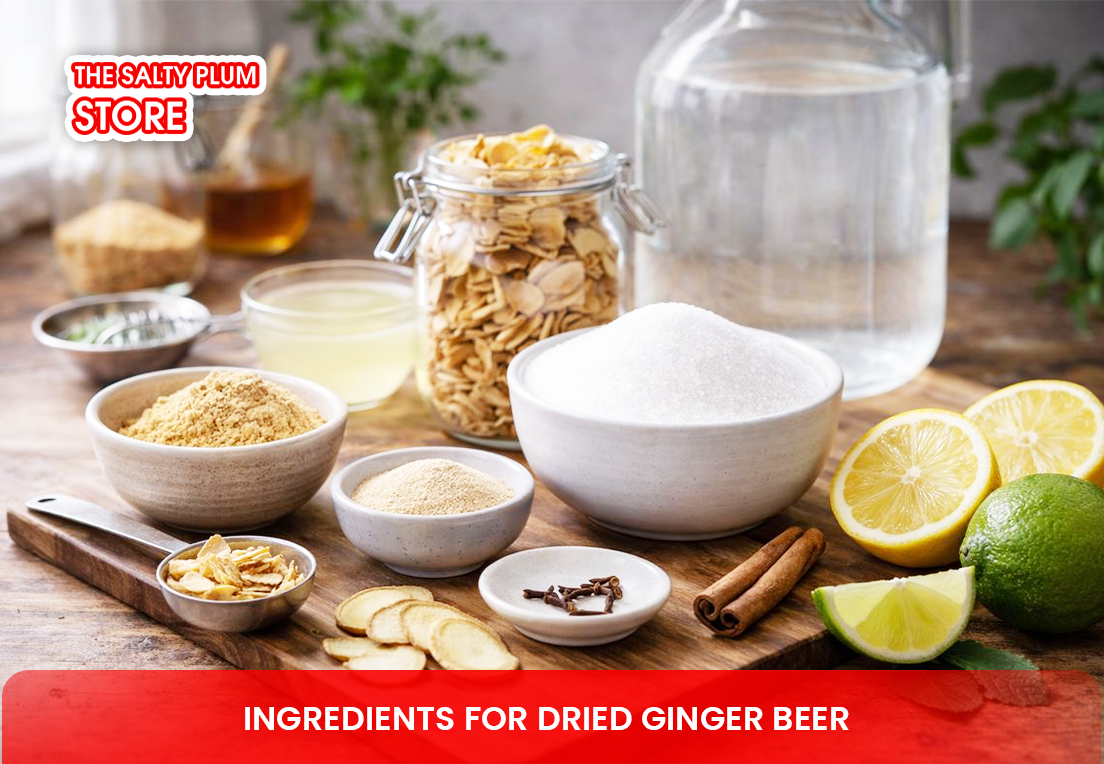
Core ingredients:
- Dried ginger: 4 tablespoons (about 28g)
Use ground ginger powder or dried ginger slices. Powder dissolves faster; slices need steeping. - Granulated sugar: 1½ cups (300g)
Feeds yeast during fermentation. White sugar works best for clean flavor. - Fresh lemon juice: ½ cup (120ml)
Balances sweetness and lowers pH for safer fermentation. - Active dry yeast: ¼ teaspoon (1g)
Champagne yeast or bread yeast both work. Less is more to avoid over-carbonation. - Water: 1 gallon (3.8L)
Filtered or boiled tap water. Chlorine can kill yeast.
Optional flavor boosters:
- Whole cloves: 4 pieces
- Cinnamon stick: 1 piece (3 inches)
- Fresh lime juice: 2 tablespoons (substitute for lemon)
Starter culture alternative:
Replace yeast with ½ cup ginger bug (fermented ginger starter) for wild fermentation. Extends fermentation to 5–7 days but adds deeper complexity.
II. Tools You Need
Gather these basic tools before starting your dried ginger beer batch. Most items are standard kitchen equipment.
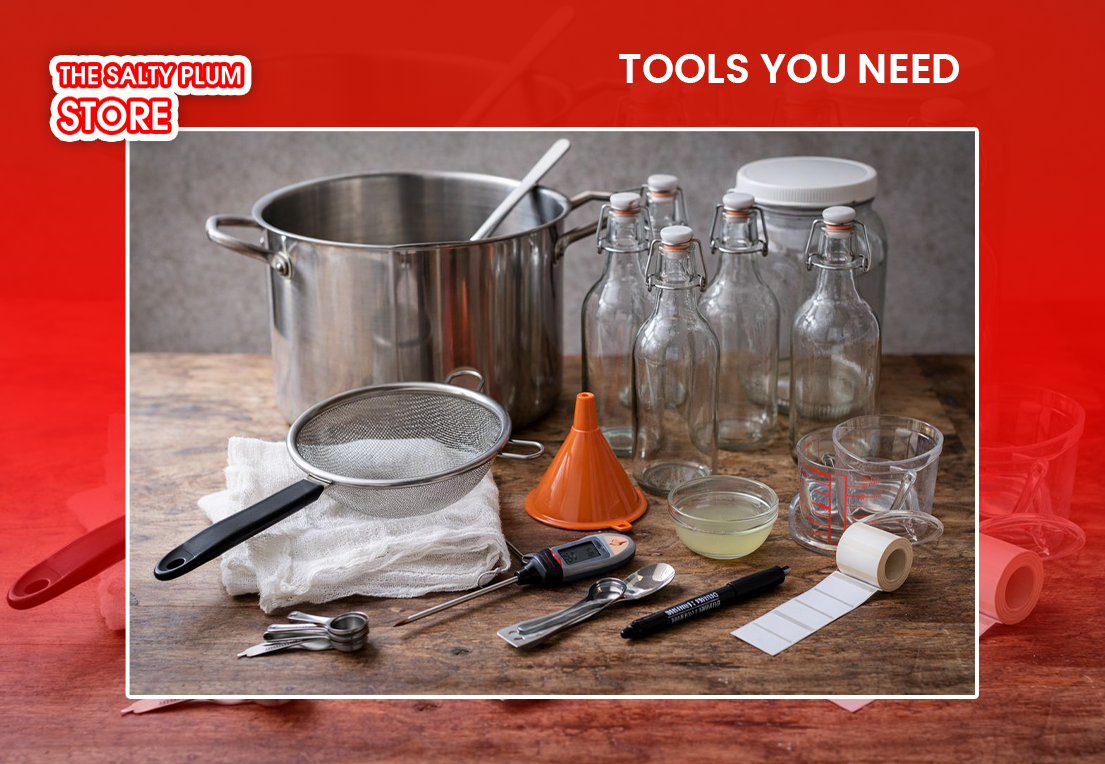
Essential tools:
- Large pot: 2-gallon capacity (7.5L minimum)
For boiling water and dissolving sugar. Stainless steel or enamel work best. - Fine-mesh strainer: 6-inch diameter or larger
Removes ginger sediment and spices before bottling. - Cheesecloth: 2 layers
Optional extra filtration for clearer ginger beer. Place over strainer. - Funnel: Wide-mouth (3+ inches)
Transfers liquid into bottles without spills. - Glass bottles with tight seals: Four 1-liter flip-top bottles OR eight 16oz bottles
Must handle pressure. Swing-top (Grolsch-style) bottles or recycled kombucha bottles work perfectly. Avoid regular screw-cap bottles. - Measuring cups and spoons: Standard set
Accuracy matters for yeast and sugar ratios. - Long spoon: Wood or stainless steel
For stirring during dissolving and cooling stages.
Safety equipment:
- Bottle opener or pressure-release tool
Test carbonation safely after 24 hours. Open bottles slowly over a sink. - Kitchen thermometer – Digital instant-read
Confirm liquid cools below 95°F (35°C) before adding yeast. High heat kills yeast.
Nice to have:
- Large glass jar (1-gallon): For fermenting before bottling
- Labels and marker: Track bottling dates
Clean all tools with hot soapy water before use. No need to sterilize like beer brewing, but cleanliness prevents off-flavors.
Read more: How to Make Dried Ginger Powder at Home
III. Step‑by‑Step Recipe: How to Make Dried Ginger Beer
Follow these steps to brew 1 gallon of naturally carbonated dried ginger beer. Total active time: 30 minutes. Fermentation time: 2–4 days.
Step 1: Steep the ginger
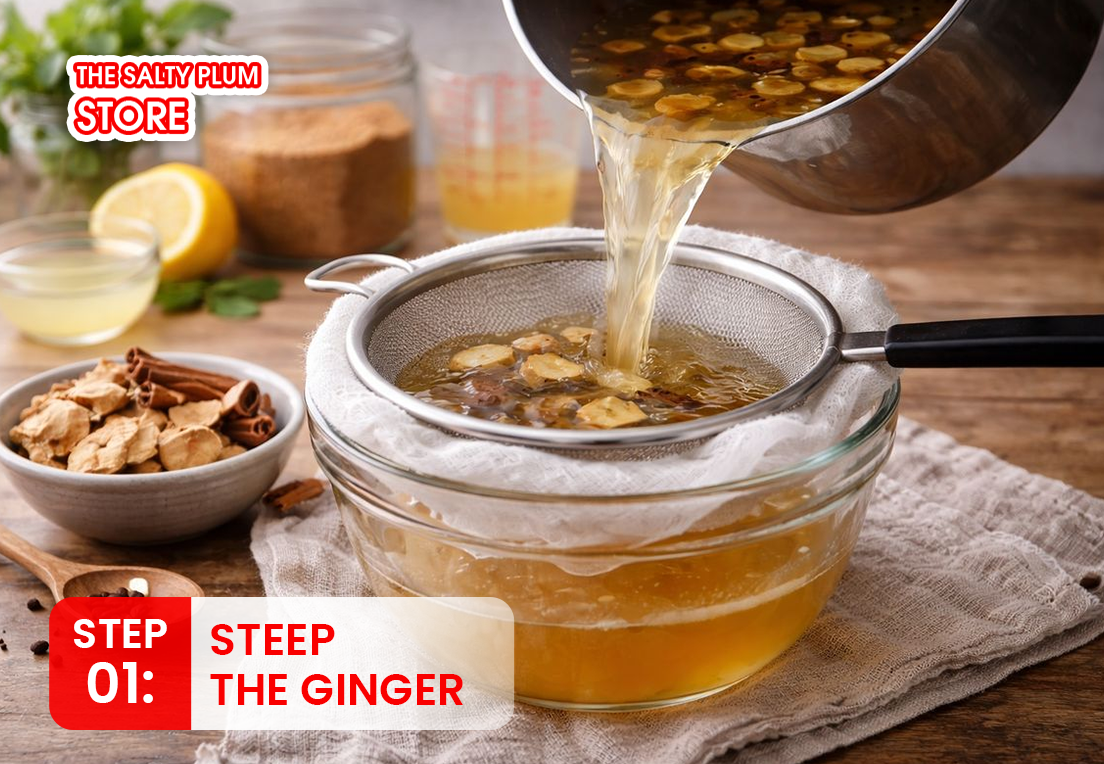
- Boil 4 cups (1L) water in your large pot.
- Add 4 tablespoons dried ginger plus optional spices (cloves, cinnamon).
- Remove from heat. Cover and steep for 20 minutes.
- Strain through fine-mesh strainer into a clean container. Discard solids.
Step 2: Dissolve the sugar
- Return ginger tea to pot.
- Add 1½ cups (300g) sugar.
- Stir over low heat until sugar fully dissolves (2–3 minutes).
- Remove from heat.
Step 3: Cool the mixture
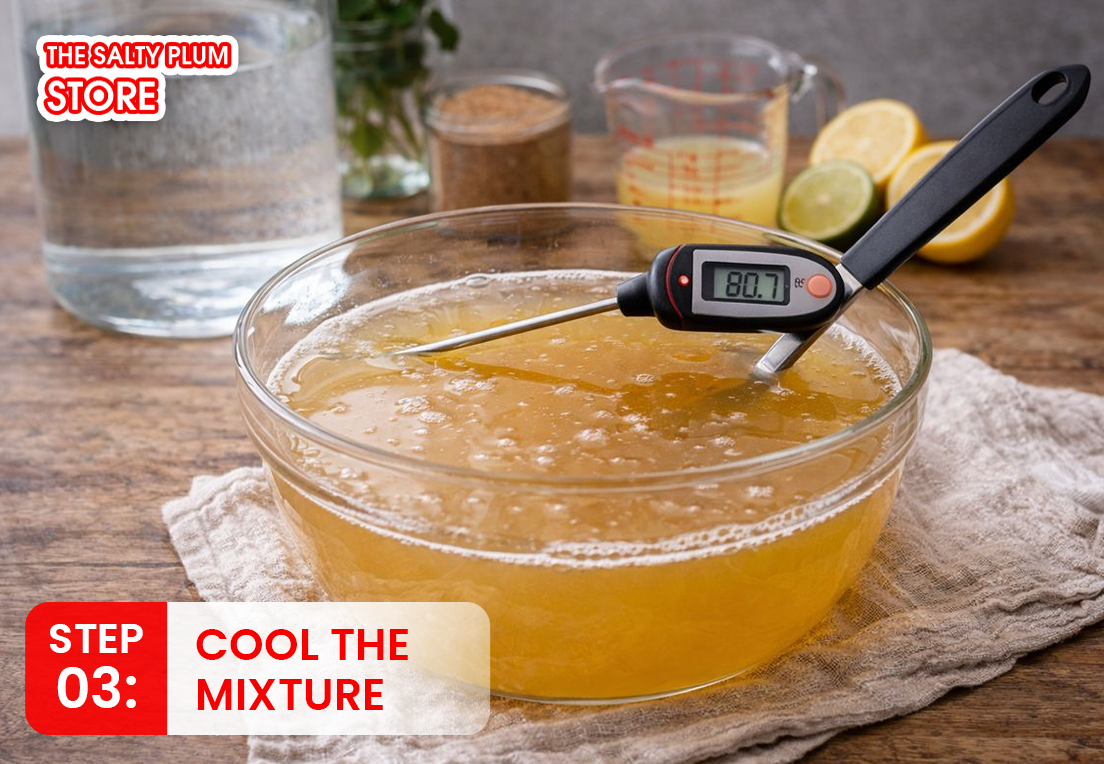
- Add remaining cold water (about 12 cups/3L) to dilute and cool.
- Check temperature with thermometer. Must reach below 95°F (35°C) before next step.
- Stir in ½ cup lemon juice.
Step 4: Add yeast
- Sprinkle ¼ teaspoon yeast over cooled liquid.
- Stir gently for 10 seconds. Do not over-mix.
- Let sit 5 minutes while yeast activates (you'll see slight foam).
Step 5: Bottle the ginger beer
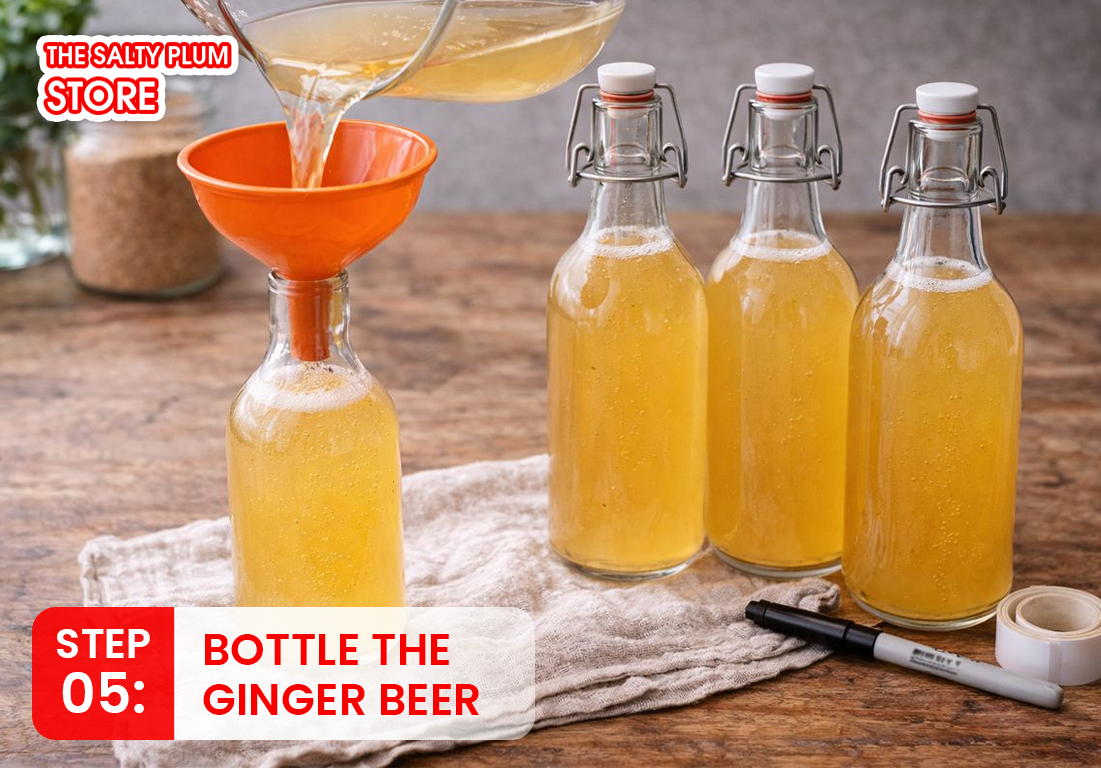
Leave 2 inches headspace in each bottle. Pressure builds during fermentation. Overfilled bottles can explode.
- Use funnel to transfer liquid into flip-top bottles.
- Seal tightly.
- Label with date.
Step 6: Ferment at room temperature
- Place bottles in a cool, dark spot (68–75°F / 20–24°C).
- Ferment for 24–48 hours for light carbonation, 3–4 days for stronger fizz.
- Check pressure daily: open one bottle over sink. If it hisses gently, carbonation is building.
Step 7: Chill and strain (optional)
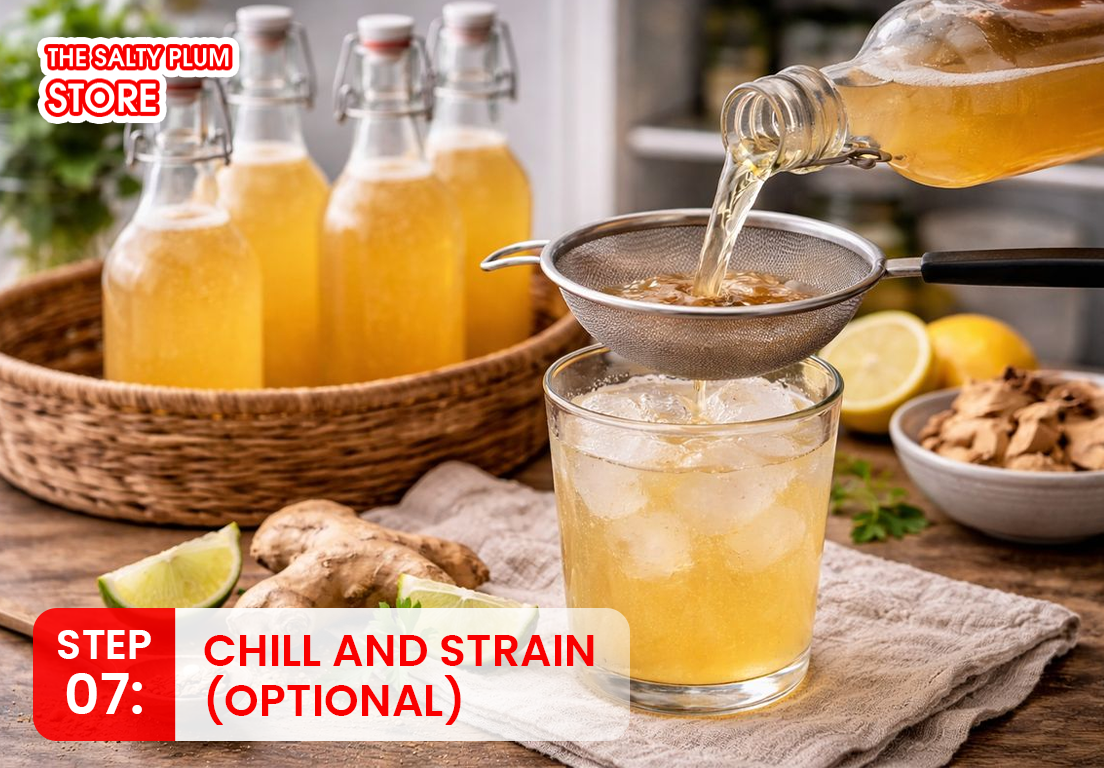
- Once carbonation reaches desired level, refrigerate immediately to halt fermentation.
- Pour through strainer when serving if sediment bothers you. Sediment is harmless yeast.
Serving suggestions:
- Moscow Mule: 2 oz vodka + 4 oz dried ginger beer + lime wedge + ice in copper mug.
- Ginger Shandy: Equal parts dried ginger beer and light lager.
- Virgin Mule: Straight over ice with fresh lime and mint.
Storage: Refrigerated dried ginger beer lasts 2 weeks. Burp bottles every 3 days to release excess pressure.
IV. Health Benefits of Dried Ginger Beer
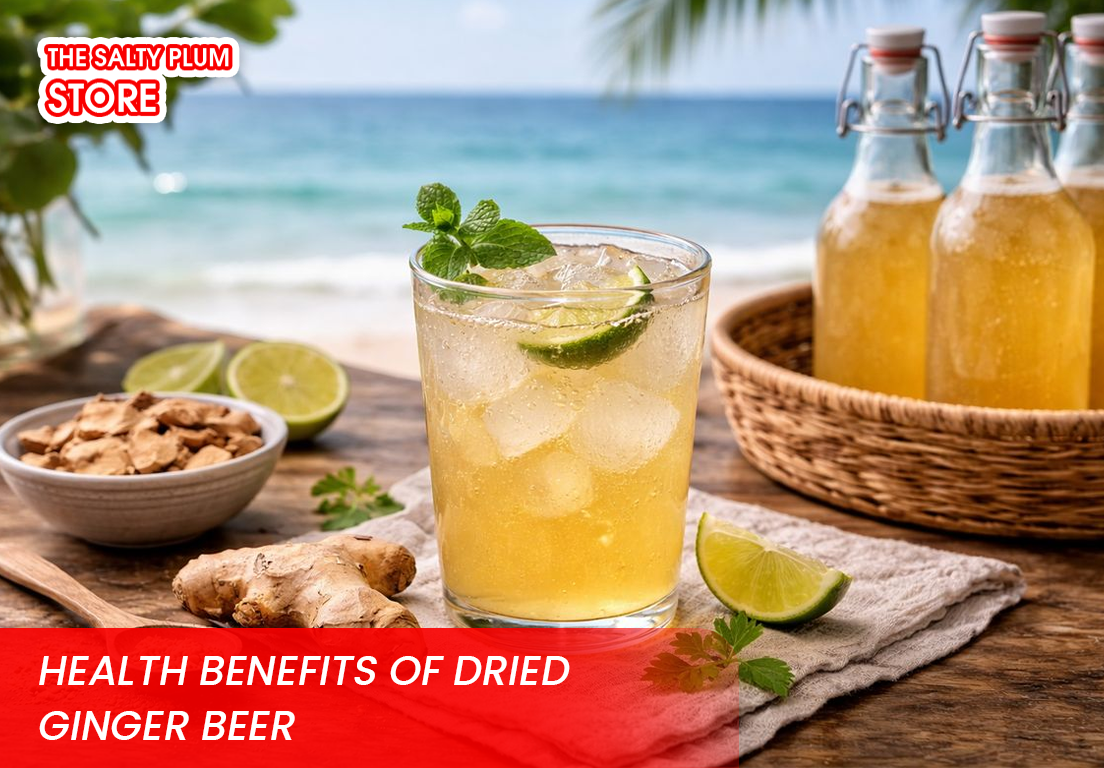
When made with natural fermentation and real ginger, dried ginger beer can offer several health-supporting benefits beyond being a refreshing drink.
- Supports digestion
Dried ginger contains concentrated gingerols and shogaols that help stimulate digestive enzymes, reduce bloating, and ease stomach discomfort. A small glass of dried ginger beer after meals can help the digestive system work more efficiently. - Provides natural probiotics
If your dried ginger beer is fermented, it contains beneficial bacteria that support gut health. These probiotics help balance intestinal flora and may improve nutrient absorption and immune function. - Helps reduce inflammation
Ginger is well known for its anti-inflammatory properties. Regular, moderate consumption of dried ginger beer may help relieve mild joint stiffness and muscle soreness caused by everyday activity. - Boosts circulation and warmth
Dried ginger has a warming effect on the body. A spicy glass of dried ginger beer can help improve blood circulation and create a pleasant internal warmth, especially in cooler weather. - Supports nausea relief
Ginger is widely used to reduce nausea and motion sickness. Dried ginger beer, when lightly sweetened and not overly carbonated, can be a gentle and soothing option for sensitive stomachs.
V. Conclusion
Making dried ginger beer at home is a simple way to enjoy a naturally spicy, lightly fermented drink with deep ginger flavor and refreshing carbonation. With clear ingredients, basic tools, and a step-by-step process, you can control sweetness, heat level, and fermentation time to suit your taste. Whether you drink it on its own or use it as a mixer, dried ginger beer is a satisfying and wholesome homemade beverage.
For the best results, start with high-quality dried ginger. You can find premium dried ginger along with a wide selection of other dried fruit products at The Salty Plum Store, making it easy to source clean, flavorful ingredients for your homemade drinks and healthy snacks.
Related Article: