




Dried mango is one of the most popular fruit snacks enjoyed around the world, loved for its naturally sweet flavor and satisfying chewy texture. Beyond being delicious, it’s also convenient to carry, has a long shelf life, and packs a surprising amount of nutrients in every bite. Whether you’re looking for a quick energy boost, a healthier alternative to candy, or a versatile ingredient to add to your meals, dried mango fits the bill. In this guide, we’ll explore everything you need to know about dried mango—from its nutritional profile and health benefits to different types, ways to enjoy it, and tips for choosing the best ones.
I. What Is Dried Mango?
Dried mango is simply fresh mango that has undergone a dehydration process to remove most of its water content while retaining its natural sweetness and nutrients. This process results in the fruit having a chewy, and at times crisp, texture based on the drying technique used.
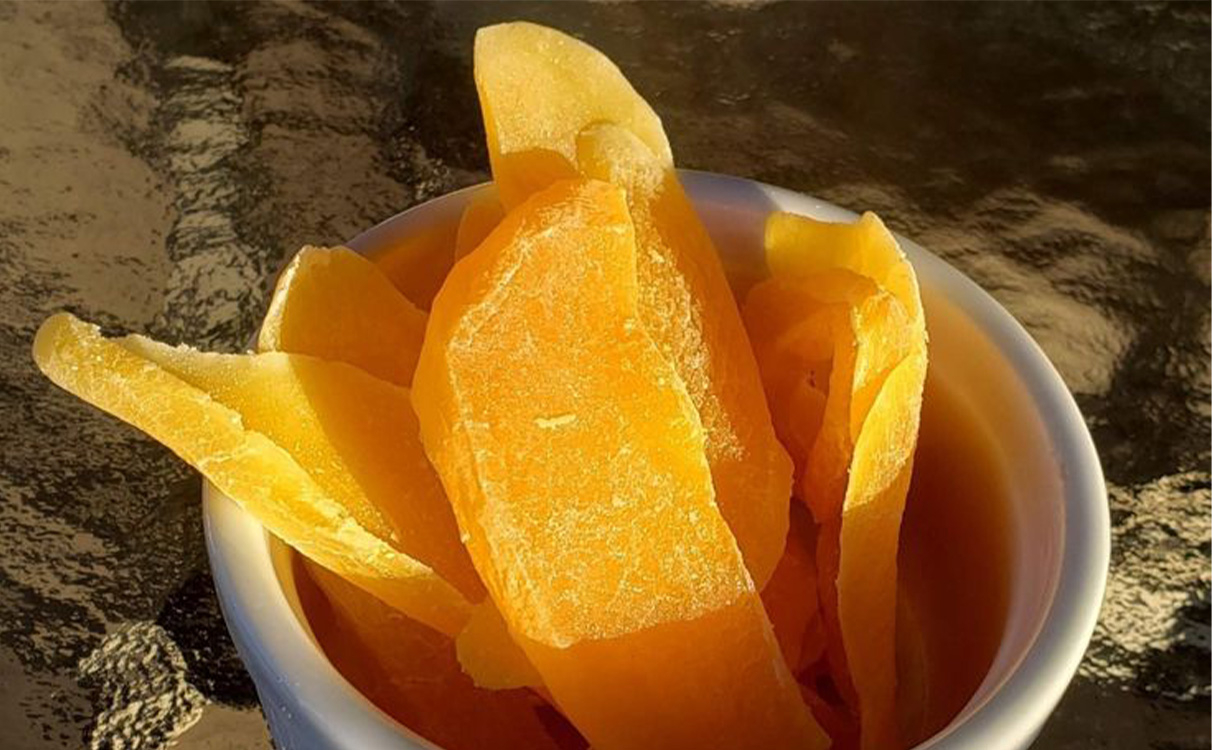
Dried mango can be made in several different ways. The most traditional method is air-drying under the sun or with controlled heat, which gives the fruit a chewy, concentrated flavor. Oven-dried mango is made in modern facilities and typically comes out with a uniform texture. Freeze-dried mango, on the other hand, preserves the fruit’s vibrant color, light crunch, and most of its nutrients, while soft-dried mango maintains a tender bite with higher moisture content.
Dried mango, unlike fresh mango, delivers a denser texture and a richer, more concentrated sweetness. While fresh mango must be eaten quickly before it spoils, dried mango has a much longer shelf life, making it a convenient snack to store and carry anywhere.
II. Nutritional Profile
Not only is dried mango flavorful, but it also contains key nutrients that make it a healthy choice when enjoyed in moderation. A typical serving provides a concentrated source of calories and carbohydrates, giving the body a quick energy boost. Because water is removed during dehydration, the fruit’s natural sugars become more concentrated, which explains its intense sweetness.
Key nutrients in dried mango include:
- Vitamins: Vitamin A (eye health, immune function), Vitamin C and E (antioxidants), and B-complex (energy metabolism).
- Minerals: Iron (blood circulation), potassium (heart and muscles), and magnesium (energy and nerve function).
- Dietary fiber: Helps regulate digestion and extends the feeling of fullness
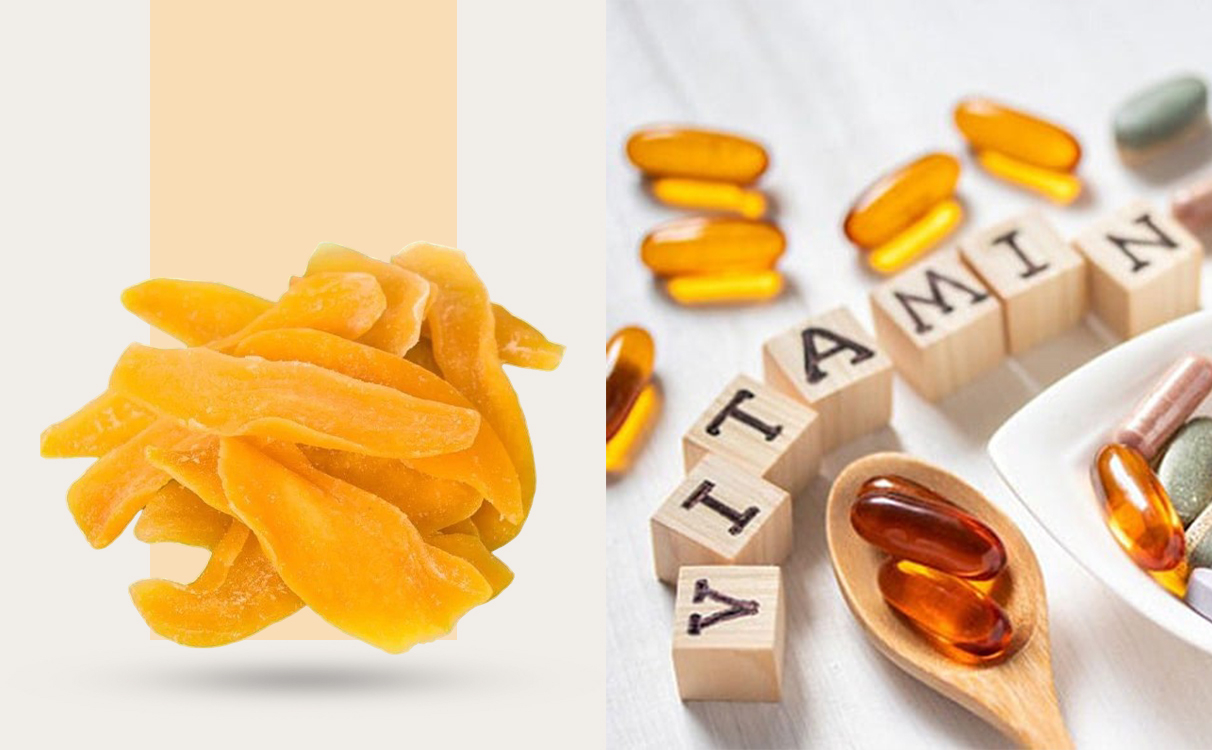
Compared with fresh mango, dried mango offers a denser concentration of these nutrients but also significantly more sugar and calories per serving due to the lack of water. That’s why controlling portions is essential. A small handful is usually enough to enjoy its flavor and benefits without overdoing it.
III. Health Benefits
More than a sweet indulgence, dried mango can offer various health benefits if consumed in moderation. Thanks to its nutrient-dense profile, it can support different aspects of overall wellness.
Key health benefits of dried mango include:
- Quick energy source: Its natural sugars and carbohydrates provide a fast energy boost, making it a convenient snack for athletes or busy individuals.
- Rich in fiber: Helps regulate digestion, supports gut health, and prevents constipation.
- Boosts immunity: Vitamin A and Vitamin C strengthen the immune system and help the body fight off infections.
- Good for skin and eyes: Antioxidants and Vitamin E contribute to healthy skin, reduce oxidative stress, and support vision.
- Supports heart health and slows aging: The antioxidants in dried mango may help reduce inflammation, protect heart function, and combat signs of aging.
👉 Discover dried mango and more at The Salty Plum Store - your trusted store for quality snacks.
IV. Types of Dried Mango
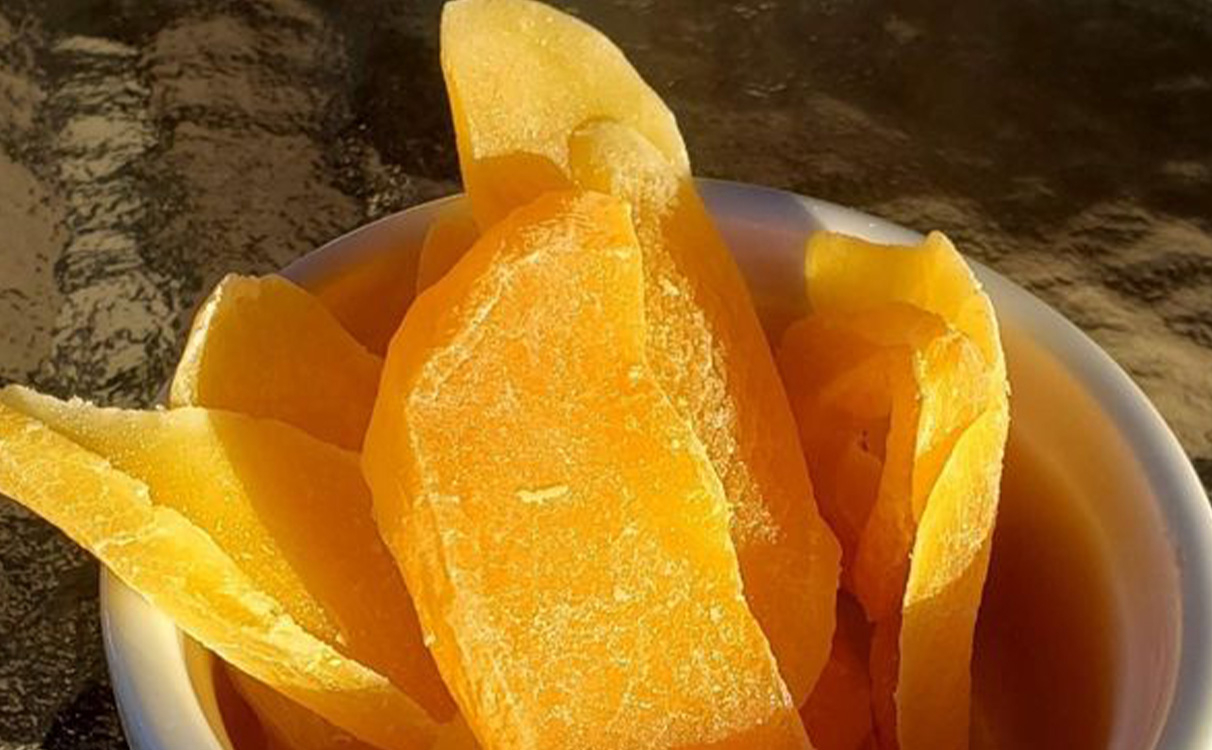
Dried mango comes in several varieties, each offering a unique flavor, texture, and level of sweetness. Which type you choose comes down to personal preference and diet requirements. Below are the most common types you will find on the market:
1. Unsweetened Dried Mango
Unsweetened dried mango is made purely from fresh mango slices that have been dehydrated without any added sugar. It keeps the fruit’s natural tangy-sweet balance and delivers an authentic mango taste. This option is particularly appealing to those who want to enjoy dried mango without the extra calories and sugar that often come with sweetened varieties. It’s also a good choice for people on low-sugar or diabetic-friendly diets, as it allows them to enjoy the fruit’s nutrients and fiber in a more natural form.
2. Sweetened Dried Mango
Sweetened dried mango is one of the most common types available in supermarkets. During processing, sugar is added to enhance the flavor and preserve the fruit, giving it a sweeter and more candy-like taste. While it is undeniably delicious and popular among children and snack lovers, it comes with higher sugar content and calories. That’s why sweetened dried mango should be eaten in moderation, particularly if you’re keeping an eye on your sugar intake. Still, it makes for a tasty treat when you crave something fruity and satisfying.
3. Soft Dried Mango
Soft dried mango is popular for its chewy, slightly moist texture that resembles the experience of eating fresh mango. Its snack-sized packaging makes it an easy, on-the-go option for anyone needing something fast, portable, and nourishing. Soft dried mango offers a delightful mix of sweetness and chewiness, making it a favorite among families. This type is commonly enjoyed straight out of the bag, but it also works well as a topping for yogurt or as part of a healthy lunchbox snack.

4. Freeze-Dried Mango
Freeze-dried mango is produced by freezing the fruit and then removing its moisture through a special drying process. This method helps preserve most of the fruit’s vitamins, minerals, and antioxidants while creating a light, crispy texture that is very different from the chewy varieties. Freeze-dried mango is a great choice for those who enjoy a crunchy snack, and it’s often added to cereals, granola, or smoothie bowls. Because it keeps much of the fruit’s original nutrition, it’s regarded as one of the best dried mango options for health.
5. Organic Dried Mango
Organic dried mango is made from mangoes grown without synthetic pesticides, fertilizers, or artificial additives. It appeals to health-conscious consumers who prioritize clean eating and sustainable farming practices. Organic dried mango usually has a more natural flavor and may come in both sweetened and unsweetened varieties. While it tends to be more expensive than conventional options, many people are willing to pay the extra cost for peace of mind, knowing they are consuming a purer product that is better for both their health and the environment.
V. How to Eat Dried Mango
One of dried mango’s biggest advantages is how versatile it is. You can enjoy it on its own or easily incorporate it into a wide range of recipes to enhance both flavor and nutrition.
- Enjoy as a snack: Dried mango is a handy, portable treat that curbs sweet cravings anytime.
- Add to breakfast bowls: Chop it up and mix into cereal, oatmeal, or granola for a fruity boost.
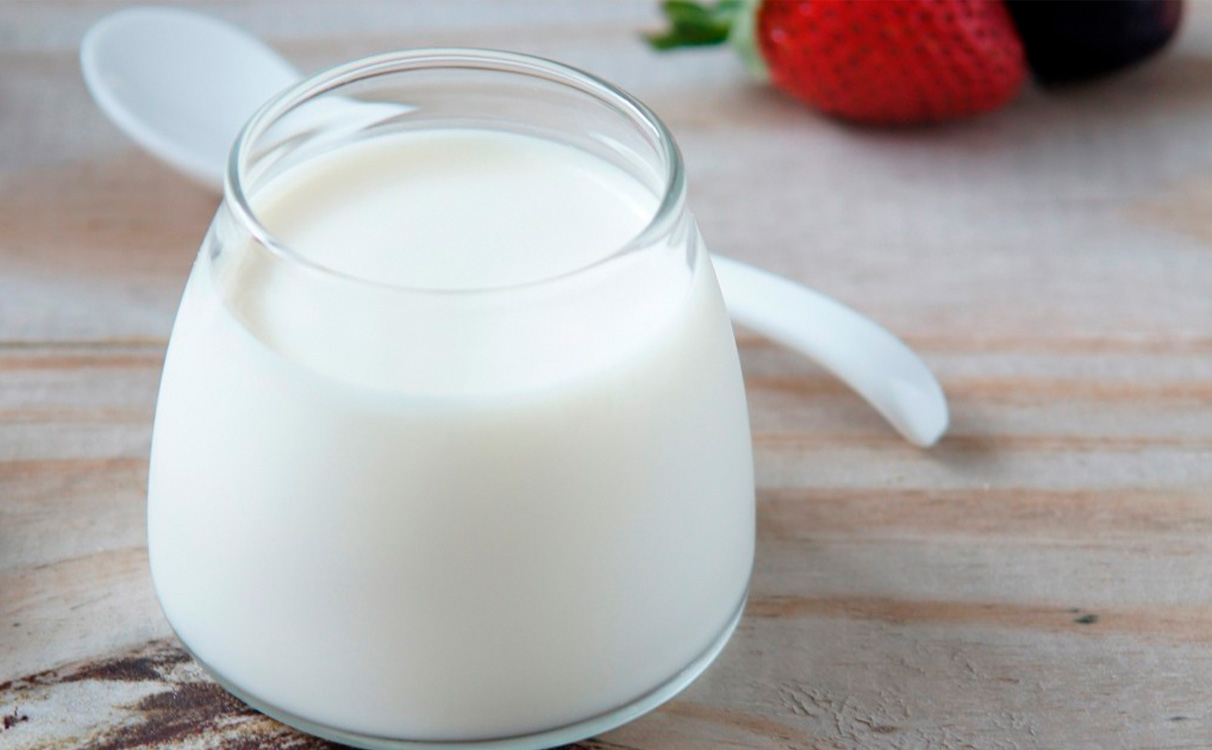
- Use as a topping: Sprinkle pieces over salads or yogurt to add natural sweetness and texture.
- In baking and desserts: Fold dried mango into cakes, cookies, or muffins for a tropical twist.
- Blend into drinks: Toss it into smoothies, teas, or even cocktails for a refreshing fruity flavor.
With so many creative options, dried mango can easily become a staple in your pantry, whether you’re snacking, cooking, or experimenting with new recipes.
VI. Buying Tips
When shopping for dried mango, a few smart choices can help you get the best quality and value:
- Check the labe: Look for products with little or no added sugar, sulfites, or preservatives to keep it as natural as possible.
- Choose organic options: If you’re health-conscious, organic dried mango ensures the fruit is grown without synthetic chemicals or additives.
- Stick to trusted brands: Reputable brands usually maintain higher safety and quality standards.
- Inspect packaging and dates: Make sure the package is sealed properly and check the expiration date to guarantee freshness.
- Compare price per weight: Some products may look affordable but offer less quantity. Checking the price per gram or ounce ensures a fair deal.

VII. Conclusion
Dried mango is more than just a sweet treat — it’s a convenient, flavorful, and nutrient-rich snack that fits easily into any lifestyle. Whether you enjoy it on its own, mix it into recipes, or use it as a quick energy boost, dried mango offers a balance of taste and health benefits.
That said, moderation is key. Because the dehydration process concentrates natural sugars, it’s best to enjoy dried mango in small portions to avoid excessive sugar intake.
As a wholesome alternative to processed snacks, dried mango can be a smart choice for children, adults, and even athletes looking for quick fuel. With the right approach, it’s a delicious way to satisfy cravings while still nourishing your body.